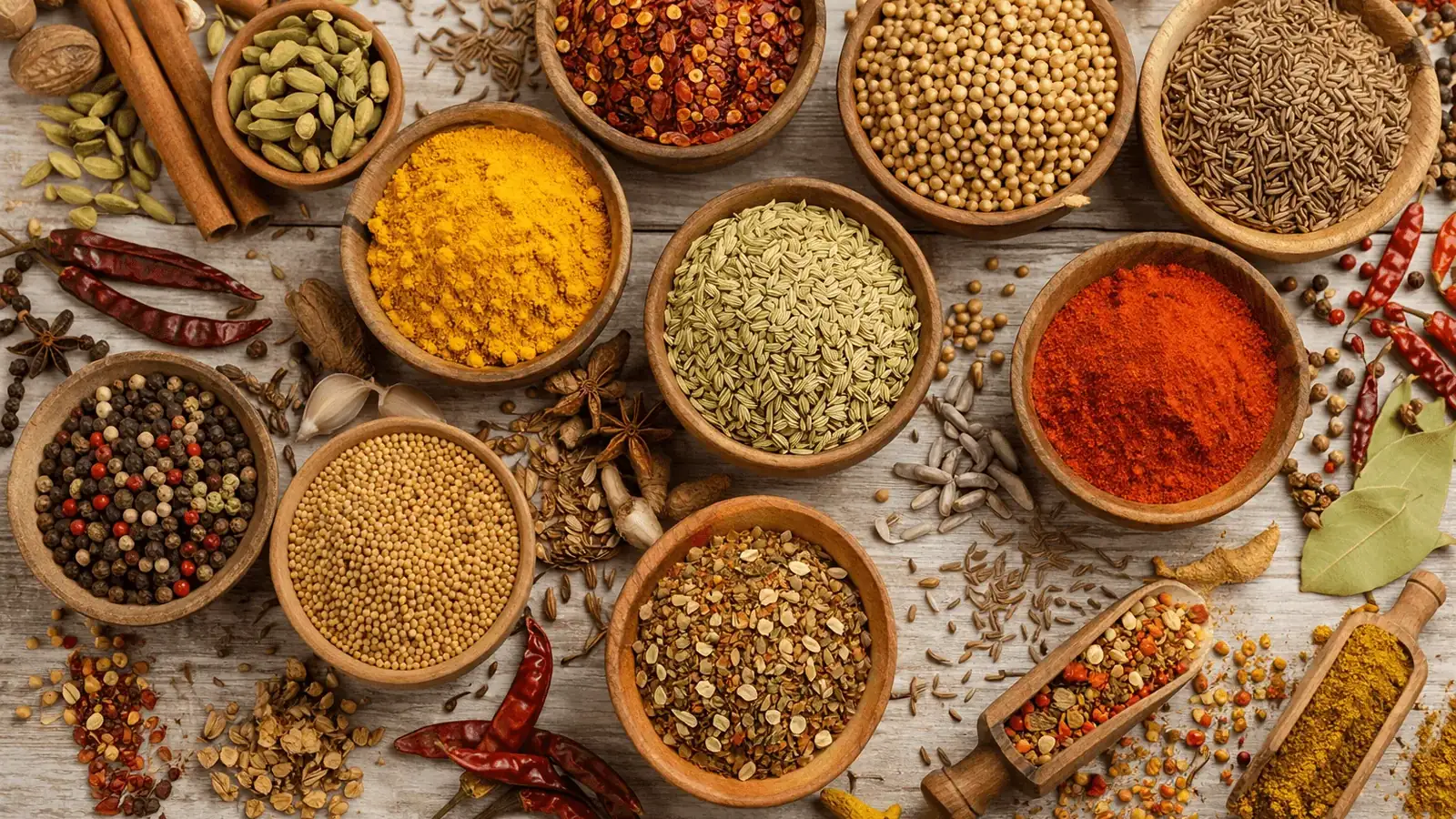
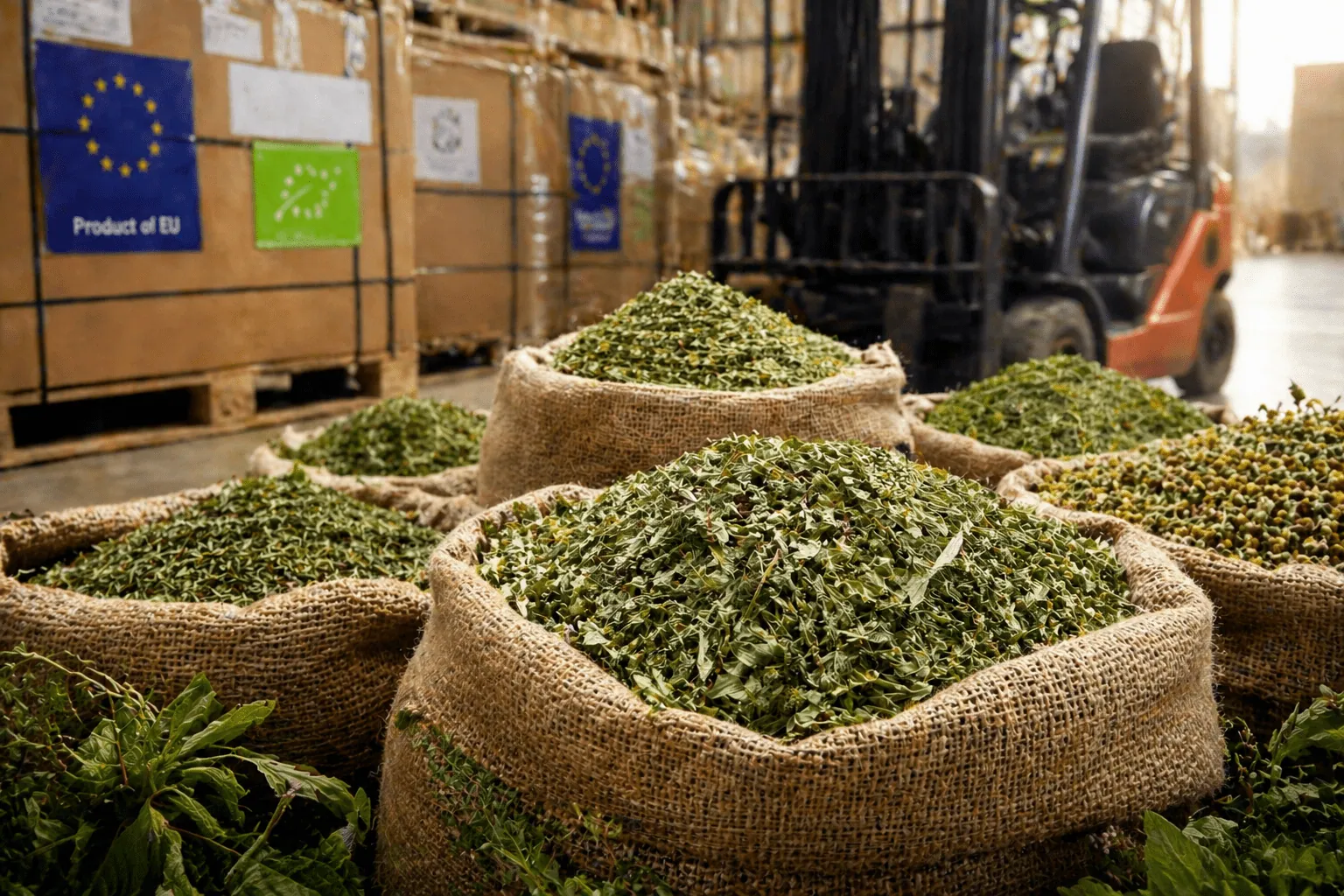
"Egyptian origin" is used as a quality claim often enough that it has started to mean very little. It is worth taking apart. There are real, physical reasons why certain botanicals do well in Egypt, and there are things origin cannot do for you. A buyer who knows which is which negotiates better.
Irrigation removes the weather from the equation
The single most consequential fact about Egyptian agriculture is that almost none of it depends on rainfall. Production sits along the Nile, in the Delta, and in depressions such as Fayoum fed by the Bahr Yussef canal. Water arrives when the grower applies it.
For a buyer, that matters in a specific way. In rain-fed origins, a wet spell during the drying window can turn a good crop into a downgraded one, and year-to-year variability shows up as variability in the parameters you contract on. Controlled irrigation narrows that band. It does not eliminate seasonal variation — nothing does — but it makes the crop more predictable, which is the property a formulator actually needs.
The drying window is the real advantage
For dried botanicals, harvest is only half the job. What happens in the days after cutting determines moisture, colour, and microbial load — and those determine whether the lot ships or is downgraded.
Egypt's harvest seasons combine high solar radiation, low humidity and a very low probability of rain. That combination allows material to be dried quickly, which preserves volatile oils and colour and closes the window in which mould can establish. It is a genuine structural advantage, and it is the reason Egyptian chamomile, mint, and seed crops travel as well as they do.
It is also an advantage that can be squandered. Drying too hot degrades essential oils and carotenoids; drying on unclean surfaces reintroduces contamination the field never had. Climate creates the opportunity; process discipline realises it.
Soil and the Delta
Alluvial soils along the Nile and in the Delta are deep, fine-textured and fertile — the product of millennia of deposition. Fayoum adds its own character: a depression with distinct drainage and mineral composition, and the reason it is named specifically for chamomile rather than treated as generic Egyptian origin.
A caution worth stating plainly: soil composition influences a plant's growth and, indirectly, its secondary metabolites, but the relationship is not simple, and claims that a particular soil produces a particular oil percentage should be treated as marketing unless they come with analytical data for the lot in front of you. The honest version of the soil argument is that Egyptian alluvial soils are well suited to these crops — not that they guarantee a number.
Proximity to the port
This is the least romantic advantage and one of the most commercially significant. Egyptian growing regions are close to Alexandria by road, and Alexandria is close to Europe by sea. Short inland legs mean fewer handling stages, less exposure to temperature and humidity in transit, and shorter total transit times to European and Mediterranean buyers.
Short transit is a quality parameter in disguise. Volatile oils dissipate, colour degrades, moisture migrates. Everything that ages a dried botanical is a function of time and conditions, and the shortest chain is usually the best-preserved one.
Cultivation knowledge
Herb and spice cultivation in Egypt is long-established, and the practical knowledge that goes with it — when to cut, how to windrow, how to judge dryness by hand — is held by growers rather than written in manuals. It is real expertise and it matters. It is also, on its own, not a food safety system: traditional knowledge tells you when the crop is ready, not what the pesticide residue profile is. Both are needed, which is why the credible Egyptian supply chain pairs grower knowledge with modern processing and testing.
What origin cannot do for you
Since this article is an argument for Egyptian origin, it should be equally clear about the limits:
- Origin is not a specification. It does not tell you moisture, purity, foreign matter or microbial load. Only analysis of the lot does.
- Origin is not a certification. Food safety certification is a property of a facility and its management system.
- Origin does not guarantee consistency between suppliers. The variation between two Egyptian exporters is often larger than the variation between two origins.
- Origin does not substitute for documentation. Your customs authority wants the certificate, not the story.
How to use origin properly in sourcing
Treat origin as a prior, not a conclusion. Egyptian origin makes certain outcomes more likely — good drying, preserved oils, short transit to Europe — and it is a rational starting point for these crops. Then verify the individual supplier: the certificate scope, the cleaning specification, the lot-specific analysis, the traceability, and whether they will contract to the sample they sent you.
You can see the range we grow and process across herbs, spices, seeds and legumes. For the sourcing process itself, see our B2B sourcing guide, or contact our export team.